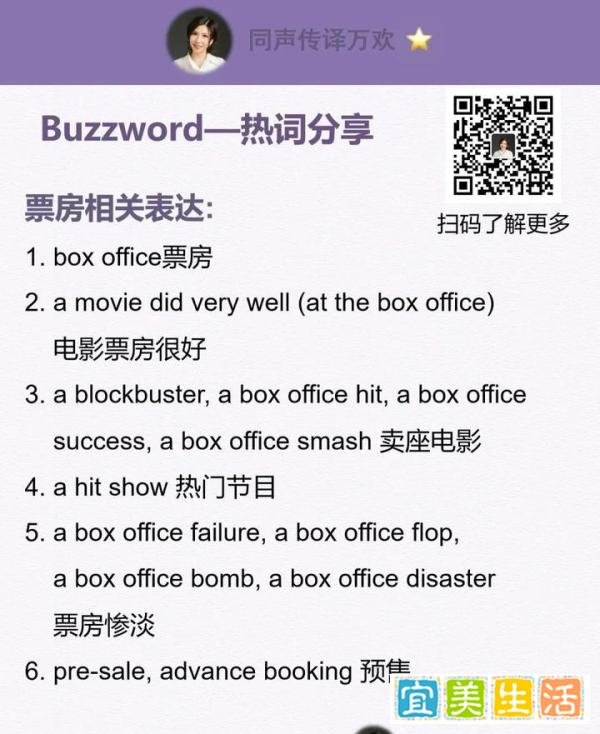
票房在英语中通常表达为“box office”。
Box office的基本含义:
Box office原指卖票的地方,无论是卖球票还是卖电影票的地方,都可以称作box office。
票房可以用观众人数或门票收入来计算,因此box office也引申为票房收入或票房成绩的含义。
描述电影票房的常用表达:
当说一部电影的票房很好时,通常不用“The box office is very good.”,而是用“a movie did very well (at the box office)”。例如,“The film has taken £180 million at the box office.”(这部电影票房收入已达1.8亿英镑。)
若要形容票房的具体数额,只需将“did very well”替换为具体数字或描述即可。
形容票房大获成功的词汇:
a box office hit:卖座电影
a box office success:票房成功的电影
a box office smash:票房大卖的电影
a blockbuster:一鸣惊人的事物,尤指非常成功的书或电影。例如,“Homegrown Chinese Blockbuster 'Lost in the Stars' Just Beat 'Fast X' at the Box Office.”(中国本土大片《消失的她》刚刚在票房上击败《速度与激情10》。)
形容热门节目的词汇:
a hit show:非常受欢迎的节目。例如,“For a hit show, profits can add up to millions of dollars.”(对于一个热门节目,利润可达上百万美元。)
形容票房惨淡的词汇:
a box office failure:票房失败的电影
a box office flop:票房惨败的电影
a box office bomb:票房炸弹(指票房极差,几乎无人问津的电影)
a box office disaster:票房灾难(形容票房极其惨淡的情况)
与票房相关的其他表达:
pre-sale:预售。例如,“The film had taken in over 240 million yuan in tickets pre-sale as of Monday afternoon, smashing several records in the country's film market.”(截至4月15日下午,该片预售票房收入已超过2.4亿元,打破了国内电影市场的多个纪录。)
advance booking:预售(与pre-sale意思相近,也可用于描述电影票的预售情况)